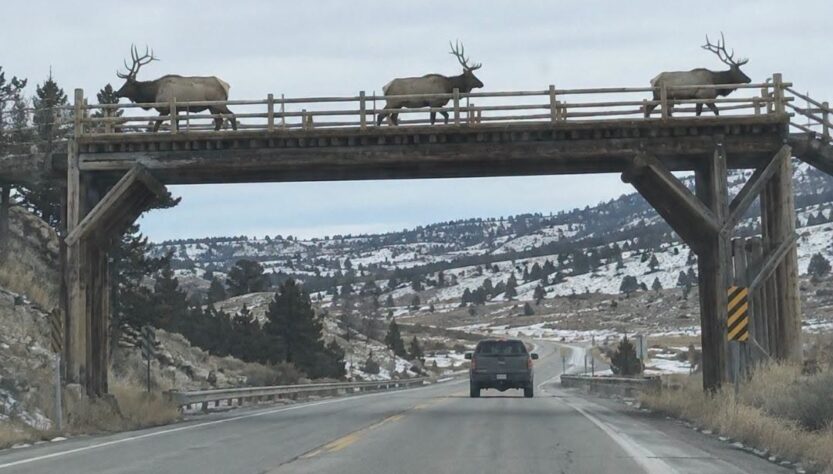
A Wyoming commuter spent his summer and $4,700 building a wildlife bridge over a rural highway. The elk love it. The state wants it gone.
Every winter, on a quiet stretch of rural Wyoming highway, one man faced the same obstacle on his way to work: elk. Not a single elk, and not a quick crossing either. These were unhurried, deliberate animals who crossed the road on their own schedule, and several times a season that schedule made him late.
Most people would have grumbled, left the house earlier, and accepted it as the cost of living in elk country. He decided to fix it.
A summer of lumber and resolve
Over roughly three months this summer, the man designed and built a narrow wooden bridge about 14 feet above the highway, giving the elk a way over the traffic instead of through it. The project cost him $4,700 and, in his words, “a lot more lumber than I originally figured,” which anyone who has attempted a home improvement project will recognize as the most honest budget report in the history of construction.
No grants, no feasibility studies, no multi-year planning process. Just one person, a clear problem, and a summer’s worth of weekends.
It works
When wildlife officials first came across the structure, they assumed it was an abandoned utility project. Then the trail cameras came back.
The footage showed several elk walking across the bridge, apparently entirely at ease with their new private overpass. The animals had evaluated the structure, found it acceptable, and adopted it as their preferred route.
The results on the road below have been just as encouraging. The builder reports that his morning commute has improved by nearly seven minutes. Over a winter of workdays, that adds up to hours reclaimed from standing still with the engine idling, watching a bull elk contemplate the center line.
The permit problem
State officials have ordered the bridge removed because he never obtained permits to build over the highway.
He has appealed, and his argument has a certain undeniable symmetry: nobody made the elk get a permit before they started crossing the road underneath it.
It is hard to picture a more fitting image for the appeal than what happened at the inspection itself. When officials arrived to assess the structure, three elk were standing on the bridge.
Why it deserves to stand
Wildlife crossings are not a fringe idea. States across the West have invested in overpasses and underpasses to keep animals off roadways, and they tend to earn their keep by reducing collisions and letting herds move along their natural routes. What makes this one unusual is not the concept but the source: a single resident who saw a problem on his daily drive and paid to solve it himself.
The elk have already cast their vote. They’re using it, and they’re using it without being asked, trained, or lured. The traffic below is moving more smoothly. A bridge that animals voluntarily adopt, that clears the road for drivers, and that cost taxpayers nothing is the kind of outcome public agencies usually spend years and considerable budgets trying to reach.
If paperwork is the problem, paperwork has a solution. Retroactive review, an engineering inspection, a permit issued after the fact: all of those are paths that end with the bridge still standing and the elk still crossing above the cars, where everyone seems to agree they belong.
For now, the appeal is pending. The bridge remains. And every morning, a man in Wyoming gets to work seven minutes sooner while the elk stroll overhead, permitless and unbothered.
Want me to put this in a doc so you can edit or share it?